






Juventud negra
Reino Unido
Episodio 6 – Arte y comunidad contra el Estado ausente

English Transcript
Ir a la transcripción en español
Flor Coll, femiñetas: [00:00:00] You are listening to In Our Hands, a podcast by INCLO and femiñetas about community responses to police violence. Around the world, people are organizing against abuses by state forces — collectives pushing back against heavy-handed policing. After decades of failed police reforms, we ask ourselves: what pathways have emerged for our security?
What options exist to keep us safe? We travel to discover these resistances and meet the people leading them. We learn from sex workers, people criminalized for drug use, and users of the mental health system. This podcast stems from INCLO’s publication In Our Hands: Communities Rooting Out Police Discrimination.
What happens when those who are supposed to protect us persecute us? We take matters into our own hands [00:01:00].
Flor Coll, femiñetas
If you open any British news portal, you will find the same story.
News: There’s a warning that children in England as young as eleven are carrying knives because they feel unsafe.
One of thirty-nine people killed following stabbings in Britain since the beginning of the year. Just this month, three seventeen-year-olds were killed in London.
Flor Coll, femiñetas: Knife attacks are out of control. Something must be done. That discourse has justified a continuous growth of police powers in the name of security for over fifteen years. But those powers fall disproportionately on young Black people and criminalize their friendships, their culture, and their everyday lives.
In fact, today Black people are sixteen times more criminalized in the United Kingdom than white people. Meanwhile, the root causes of violence—poverty, inequality, state neglect— [00:02:00] remain unaddressed. But in North London, a different approach is taking root.
Art Against Knives keeps young people off the streets not through policing or repression, but through creativity—giving them a space to express themselves, gain skills, and imagine a different future. Today we head to the borough of Barnet. We speak with two people who embody this new approach: Sophie Ogunyi, who devotes her career to creating safe spaces for youth, and Guyfred Rurangirwa, who grew up in those spaces and is now helping shape them for the next generation.
Both met at Art Against Knives, a community center created after the death of a twenty-one-year-old stabbed in a street fight. This episode takes as its [00:03:00] starting point the In Our Hands article: Art and Community in the UK.
Sophie Ogunyi, Art Against Knives: Well, my name is Sophie.
I’m a youth worker for Art Against Knives and also a youth advisor, which is like an advisor on issues of violence. Every young person I meet has a completely different experience, but many of them, if not all, have suffered some form of harm. And much of that is due to systemic harm.
So I suppose that’s where we try to focus our energy.
Flor Coll, femiñetas: Often, youth violence in the UK is treated as an individual behavioral issue: young people who need to be controlled, criminalized, or contained. But the evidence points elsewhere: to insecurity, cuts to youth services, and racism embedded within the very systems that ought to protect young people.
Art Against Knives seeks non-police alternatives [00:04:00] to address youth safety issues.
Sophie Ogunyi, Art Against Knives: When people hear that we do much of this work through creativity, they imagine that we simply paint with the young people. And that’s the kind of shift we try to instill. Of course, engaging in creative activities with young people is a very important part, as well as seeing the variety of skills and talents they all have.
But for us, it goes beyond that. It’s about creative approaches to how we support young people. Yes, you have to be creative with this. We know these systems are harmful. We know they are causing a lot of violence and harm to these young people, and we must do everything possible not to uphold them, even though it’s difficult, since we are all part of these systems and have to operate within them.
But we have seen how harmful they can be. And there are other ways; I think something AAK places a lot of emphasis on is transformative justice and looking for other ways to demand accountability, [00:05:00] but also helping people heal from harm and violence. Safety is a huge priority for us, and I think young people feel safe with us—that’s why they encourage other community members to come to us if they need help, because they know we will support and keep them safe, and that we won’t penalize or criminalize them, nor worsen the harm they already face out there.
Flor Coll, femiñetas: Art Against Knives offers psychological support and risk assessment alongside more traditional social work services, but it also places emphasis on building community through workshops like music sessions or the podcast led by young people.
Sophie Ogunyi, Art Against Knives: Many young people have fairly negative experiences with institutional services, which can feel quite cold [00:06:00] and disconnected from who they are, how they grew up, and the community they come from. By contrast, when you use creativity to build relationships with young people, a whole new door opens to understanding them.
In cases where they might not be able to articulate what they feel, lack the words to express it, or don’t feel comfortable doing so, creativity helps them achieve it. For us, it helps us better understand who they are, what their needs are, how best to support them, how to advocate for their interests, and how to teach them to advocate for themselves.
It provides them with the language to communicate and share their experiences.
If you are Black, your experiences of violence may be completely different, and the responses to the violence you experience can be very distinct from those of your peers.
Flor Coll, femiñetas: The media and the state stigmatize young Black people as responsible for the violence they suffer. On the other hand, for [00:07:00] many of the young people Art Against Knives works with, the systems around them have never offered the right words—not in school, not in courtrooms, and not in a social worker’s office.
Creativity doesn’t just give them something to do; it gives them a way to express themselves and, above all, to process what they have experienced.
Sophie Ogunyi, Art Against Knives: It’s very different from saying, “My name is so-and-so and I went through this.” Instead, if we talk about gender-based violence, for instance, during a session, there is room for them to detach from their personal stories while still processing their experiences, speaking about them and the harm suffered without having to refer directly to themselves—which for many young people can be important, since many things they live through and need support with make them feel vulnerable.
And we believe that everything we do should be youth-led and survivor-centered. We co-create and [00:08:00] co-design things in collaboration with young people across all areas, whether for an exhibition we organize or for a risk assessment related to their safety. We try to keep them involved in the process as much as possible.
Additionally, this teaches them skills they can use later in the workplace. And I think many people, when they hear about violence, only think of one-on-one or interpersonal violence. But all violence is interconnected, and it all stems from systems.
Flor Coll, femiñetas: That idea—giving youth autonomy, a voice, and the tools to build their own future—is what sets Art Against Knives apart from traditional institutions.
We hear now from someone who walked through those very doors years ago as a teenager. Guyfred grew up in North London neighborhoods. He stumbled upon Art Against Knives by chance when he was fourteen. Today, he works as a support worker in a secondary [00:09:00] school—a path that, for him, began in that community space.
Guyfred Rurangirwa: My name is Guyfred, and I’m from North London, from the Barnet, Enfield, and Haringey area. Right now I work in a secondary school with students between eleven and sixteen years old. I’m very interested in reading and writing. I’m trying to practice writing on my own, though I probably read much more than I write.
I try to stay in shape, and well, I guess I’m an Arsenal fan, if that sounds interesting to you.
Flor Coll, femiñetas: When Guyfred first walked into Art Against Knives, no one had referred him there. There was no intervention, no crisis that brought him to that place. It was something simpler, and in many ways, more powerful than all of that.[00:10:00]
Guyfred Rurangirwa: The truth is I found out about Art Against Knives by pure chance. It was very spontaneous. One day after school I was walking down North Finchley High Street with my friends, and we saw a group of older teenagers whom we recognized. They were in a huge group. At the time, that’s how I saw it—I just saw a huge group.
It looked a bit daring, interesting, like: what was going on? The only other times we gathered in such large groups were at the fast food shop or at school itself. We didn’t think twice. We were very curious to find out what it was about. And on top of that, it was free. So that was very important for us, because for all other extracurricular activities outside of school, you either had to pay, have some kind of scholarship, or [00:11:00] have some form of funding.
And personally, that was out of my reach. Honestly, it was as simple as that—from then on, we started going to the space every Wednesday. What they did there was music: music production, recording, DJing, making beats, graphic design, mentoring. So the young people and the staff—you know, I built relationships with them that we didn’t have with any other network of adults in our lives, except maybe our families if any of us were lucky.
But definitely in school or with local authorities, we didn’t have that kind of connection with any adult figure.
Flor Coll, femiñetas: A free, welcoming space where young people can be creative, receive guidance, and simply feel at home is exactly what is missing in the lives of those who need it most. Government cutbacks have [00:12:00] devastated youth services across England, and Art Against Knives fills that void.
But it didn’t just give Guyfred a place to go. It gave him a craft and a community.
Guyfred Rurangirwa: My personal journey at Art Against Knives began when I started DJing. I remember I was around fourteen, and one of the team members, Jude, taught me how to DJ. He was very influential and supported me a lot. So I went there on Thursdays to learn DJing, and then on Wednesdays we would showcase everything we had learned.
It was really fun.
That same year I started organizing house parties for my friends and people in my neighborhood. I was still young, but I was doing [00:13:00] things that felt super fun to me, you know? So I haven’t stopped using that space or participating or dropping by, but I no longer focus on music or DJing. Now I’m more like a youth worker.
That’s how I would describe myself. And I receive support and interact with Art Against Knives, or get support from them in this aspect of my life now.
Flor Coll, femiñetas: Guyfred’s journey, from a curious fourteen-year-old teenager to a support worker, is remarkable—but also, as he would say, deeply practical. The organization didn’t stop at nurturing his creativity. It also supported him during the most difficult times: housing, studies, finding his path. And when his interests shifted toward youth work and social justice, they helped him take that step too.
Guyfred Rurangirwa: Over the years, Art [00:14:00] Against Knives has meant a second chance for me. The first chance was, I suppose, the default framework of life and culture in the UK, which unfortunately is very opposed to the values and practices of Art Against Knives. You know, around here it’s very hard to find a genuine community—well, it’s not hard to find, but I guess for me personally in my life, it was hard to find a community.
I struggled to build self-confidence, uh, I struggled to have healthy relationships with adults I could trust, or even with my own peers. That space, you know, the fact that we had that space influenced how we related to one another, because they were there to guide us and offer us these activities.
In 2023 I had started becoming very interested in youth work, [00:15:00] social justice, and all those kinds of things, but I had no formal training. Basically they gave me a job as a peer leader, which is someone positioned halfway between a young person and a full-time staff member.
So I got paid and was essentially an advocate for all the young people, as well as a mentor for those younger than me. And it was great. There wasn’t a clear idea of what it would look like long term or what they were really doing, but I was just having a good time and learning a lot while being there.
And by that time we had already started visiting secondary schools. I had also returned to my former school to run a workshop on Black men’s mental health. Then one of the schools I had visited with Art Against Knives ended up having a full-time vacancy available.
And yeah, it was amazing.
Flor Coll, femiñetas: Growing up [00:16:00] in North London meant carrying a complicated relationship with the police, defined not so much by direct confrontation, but by shared community experience.
Guyfred Rurangirwa: On a personal level, I would say I’ve had more positive than negative experiences with the police.
However, I’ve always been aware that the culture I come from has this negative relationship with the police. I definitely never trusted the police to ensure my safety. But for the young people I work with, seeing how they are treated and seeing that they don’t trust the police—now that I know how important trust and safety are, it’s sad to see young people in a situation similar to the one I lived through, where we don’t even have a concept of safety to realize that we have a problem with our own concept of safety.
Does that make sense? It’s like, at least if you know there’s a problem, that uncomfortable feeling pushes you to do something, to speak up [00:17:00] or at least become aware. But day after day I just see the young people I support go through situations with the police or have interactions with the police that I know will have future consequences, and are already having consequences right now.
Flor Coll, femiñetas: A second chance. It’s a small phrase for something huge. For Guyfred, it was a Wednesday afternoon on the streets of Barnet, a flyer handed to him, and the decision to return the following week. For Sophie, it’s every day she shows up to work, making sure that space remains there, remains safe, and remains free.
What Art Against Knives demonstrates to us is that communities already know what they need to protect themselves: funding, recognition, a space to do it, but also a paradigm shift in what is usually called safety, so that it becomes a truly [00:18:00] universal right. This episode was produced as part of INCLO’s In Our Hands project, which explores community responses to discriminatory policing practices.
The full article, “Art and Community in the UK,” is available at inclo.net. We thank Art Against Knives and Liberty Human Rights for participating in this episode and for their article. The music and sound clips heard in this episode belong to Art Against Knives and were produced in their workshops by young people in North London.
To read more about community alternatives to violence, you can download Holding Our Own, a guide produced by Liberty.
Transcripción en Español
Flor Coll, femiñetas: [00:00:00] Estás escuchando En nuestras manos, un pódcast de INCLO y femiñetas sobre respuestas ciudadanas a la violencia policial. En todo el mundo hay personas que se organizan frente a los abusos de las fuerzas del Estado, colectivos que le ponen un freno a la mano dura. Después de décadas de reformas policiales fallidas, nos preguntamos: ¿qué caminos surgieron para nuestra seguridad?
¿Qué opciones existen para cuidarnos? Viajamos para descubrir estas resistencias y conocer a quienes las lideran. Aprendemos de trabajadoras sexuales, personas criminalizadas por consumir drogas, usuarias del sistema de salud mental. Este pódcast surge de la publicación de INCLO En nuestras manos: comunidades que arrancan de raíz la discriminación policial.
¿Qué pasa cuando los que nos tendrían que cuidar nos persiguen? Tomamos las riendas en nuestras manos[00:01:00]
Si entrás a cualquier portal de noticias británico, encontrarás la misma historia.
noticiero: There’s a warning that children in England as young as eleven are carrying knives because they feel unsafe.
One of thirty-nine people killed following stabbings in Britain since the beginning of the year. Just this month, three seventeen-year-olds were killed in London.
Flor Coll, femiñetas: Los ataques con cuchillo están fuera de control. Hay que hacer algo. Ese discurso ha justificado un crecimiento continuo de los poderes policiales en nombre de la seguridad desde hace más de quince años. Pero esos poderes recaen de manera desproporcionada sobre los jóvenes negros y criminalizan sus amistades, su cultura, su vida cotidiana.
De hecho, hoy las personas negras son dieciséis veces más criminalizadas en el Reino Unido que las personas blancas. Mientras tanto, las verdaderas causas de la violencia, la pobreza, la desigualdad, el abandono del Estado, [00:02:00] siguen sin abordarse. Pero en el norte de Londres hay un enfoque diferente que está echando raíces.
Art Against Knives mantiene a los jóvenes alejados de las calles, no mediante la vigilancia ni la represión, sino mediante la creatividad, dándoles un espacio para expresarse, adquirir habilidades e imaginar un futuro diferente Hoy nos desplazamos al barrio de Barnet. Hablamos con dos personas que encarnan este nuevo enfoque: Sophie Ogunyi, que dedica su carrera a crear espacios seguros para los jóvenes, y Guyfred Rurangirwa, que creció en esos espacios y ahora ayuda a darles formas para la próxima generación.
Ambos se conocieron en Arts Against Knives, Arte Contra Cuchillos, un centro comunitario creado tras la muerte de un joven de veintiún años apuñalado en una pelea callejera. Este episodio toma como [00:03:00] punto de partida el artículo de In Our Hands: arte y comunidad en el Reino Unido.
Sophie Ogunyi, Art Against Knives: Bueno, me llamo Sophie.
Soy trabajadora social para jóvenes de Arts Against Knives y también asesora de jóvenes, lo cual es como una asesora en temas de violencia. Cada joven que conozco tiene una experiencia completamente diferente, pero muchos de ellos, si no todos, han sufrido algún tipo de daño. Y gran parte de eso se debe a un daño sistémico.
Así que supongo que ahí es donde tratamos de enfocar nuestra energía.
Flor Coll, femiñetas: Muchas veces la violencia juvenil en el Reino Unido se trata como un problema de conducta individual. Jóvenes que hay que controlar, criminalizar o contener. Pero las pruebas apuntan a otro lado: a la precariedad, a los recortes en los servicios para la juventud, al racismo arraigado en los propios sistemas que deberían proteger a los jóvenes.
Arts Against Knives busca alternativas no policiales [00:04:00] para abordar los problemas de seguridad de los jóvenes.
Sophie Ogunyi, Art Against Knives: Cuando la gente escucha que hacemos gran parte de este trabajo a través de la creatividad, se imaginan que simplemente pintamos con los jóvenes. Y ese es el tipo de cambio que intentamos inculcar. Y por supuesto, realizar actividades creativas con los jóvenes es una parte muy importante, además de ver la variedad de habilidades y talentos que todos tienen.
Pero para nosotros va más allá de eso. Se trata de enfoques creativos sobre cómo apoyamos a los jóvenes. Sí, hay que ser creativo con esto. Sabemos que estos sistemas son dañinos. Sabemos que están causando mucha violencia y daño a estos jóvenes y debemos hacer todo lo posible por no sostenerlos, aunque sea difícil, ya que todos formamos parte de estos sistemas y tenemos que operar dentro de ellos.
Pero hemos visto lo dañinos que pueden ser. Y hay otras formas, y creo que algo en lo que AK pone mucho énfasis es la justicia transformadora y buscar otras formas en las que podamos exigir rendición de [00:05:00] cuentas, pero también ayudar a las personas a sanar el daño y de la violencia. La seguridad es una prioridad enorme para nosotros y creo que los jóvenes se sienten seguros con nosotros y es por eso que animan a otros miembros de la comunidad a acudir a nosotros si necesitan ayuda, porque saben que los vamos a apoyar y mantener a salvo y que no los vamos a penalizar ni criminalizar ni vamos a agravar el daño que ya tienen que enfrentar ahí afuera.
Flor Coll, femiñetas: Arts Against Knives ofrece acompañamiento psicológico y evaluación de riesgo, así como otros servicios más clásicos de trabajo social, pero también hace énfasis en construir comunidad a través de los cursos como el taller de música o el pódcast que conducen los jóvenes.
Sophie Ogunyi, Art Against Knives: Muchos jóvenes tienen experiencias bastante negativas con los servicios más institucionales, que pueden parecerles bastante fríos [00:06:00] y desconectados de quiénes son, de cómo han crecido y de la comunidad de la que provienen. En cambio, cuando usas la creatividad para construir relaciones con los jóvenes, se abre toda una nueva puerta para comprenderlos.
En los casos en que tal vez no puedan articular lo que sienten, no tengan las palabras para expresarlo o no se sientan cómodos para hacerlo, la creatividad los ayuda a lograrlo. A nosotros nos ayuda a comprender mejor quiénes son, cuáles son sus necesidades, cómo apoyarlos mejor, cómo defender sus intereses y cómo enseñarles a defenderse por sí mismos.
Les brinda el lenguaje para comunicar sus experiencias y compartirlas.
Si eres negro, tus experiencias de violencia pueden ser completamente diferentes y las respuestas a la violencia que sufres pueden ser muy distintas a las de tus pares.
Flor Coll, femiñetas: Los medios y el Estado estigmatizan a los jóvenes negros como responsables de la violencia que sufren. Por otro lado, para [00:07:00] muchos de los jóvenes con quienes trabaja Art Against Knives, los sistemas que los rodean nunca les han ofrecido las palabras adecuadas, ni en la escuela, ni en los tribunales, ni en el despacho de un trabajador social.
La creatividad no les da simplemente algo que hacer, les da una forma de expresarse y sobre todo, de procesar lo vivido.
Sophie Ogunyi, Art Against Knives: Es muy diferente decir: “Me llamo tal y he pasado por tal cosa”. En cambio, si hablamos de violencia de género, por ejemplo, y estamos llevando a cabo una sesión, existe la posibilidad de que se desconecten de sus historias personales, pero aun así puedan procesar sus experiencias, hablar de ellas y del daño sufrido, sin tener que referirse a sí mismos, lo cual para muchos jóvenes puede ser importante, ya que muchas de las cosas que viven y en las que necesitan apoyo los hacen sentir vulnerables.
Y creemos que todo lo que hacemos debe estar dirigido por los jóvenes y centrado en los supervivientes. Cocreamos y [00:08:00] codiseñamos cosas en colaboración con los jóvenes en todos los ámbitos, ya sea para una exposición que organizamos o para una evaluación de riesgos relacionada con su seguridad. Tratamos de mantenerlos involucrados en el proceso tanto como sea posible.
Además, esto les enseña habilidades que podrán utilizar más adelante en el ámbito laboral. Y creo que mucha gente cuando oye hablar de violencia, solo piensa en la violencia uno a uno o en la violencia interpersonal. Pero toda la violencia está interconectada y toda parte de los sistemas.
Flor Coll, femiñetas: Esa idea, dar a la juventud autonomía, voz y las herramientas para construir su propio futuro, es lo que distingue a Arts Against Knives de las instituciones tradicionales.
Escuchamos ahora a alguien que cruzó esas mismas puertas hace años, siendo adolescente. Guifred creció en los barrios del norte de Londres. Se topó con Arts Against Knives de casualidad a los catorce años. Hoy es asistente social en una escuela [00:09:00] secundaria, un camino que para él nació en aquel espacio comunitario.
Guyfred Rurangirwa: Me llamo Guyfred y soy del norte de Londres, de la zona de Barnet, Enfield y Haringey. Y en este momento trabajo en una escuela secundaria, así con alumnos de entre once y dieciséis años. Me interesa mucho leer y escribir. Estoy tratando de practicar la escritura por mi cuenta, aunque probablemente leo mucho más de lo que escribo.
Trato de mantenerme en forma y bueno, supongo que soy fan del Arsenal, si eso les parece algo interesante.
Flor Coll, femiñetas: Cuando Gifford entró por primera vez en Art Against Knives, nadie le había derivado allí. No hubo ninguna intervención, ninguna crisis que le llevara hasta ese lugar. Fue algo más sencillo y en muchos sentidos más poderoso que todo eso.[00:10:00]
Guyfred Rurangirwa: La verdad es que me enteré de Art Against Knives por pura casualidad. Fue algo muy espontáneo. Un día después de clase estaba caminando por North Finchley High Street, iba caminando con mis amigos y vimos a un grupo de adolescentes mayores a quienes reconocíamos. Estaban en un grupo enorme. En ese momento, así es como lo percibí, solo vi un grupo enorme.
Se veía un poco atrevido, interesante, como ¿qué estaba pasando? Las únicas otras ocasiones en que nos reuníamos en grupos tan grandes era en la tienda de comida rápida o en la misma escuela. Y no lo pensamos dos veces. Teníamos mucha curiosidad por descubrir de qué se trataba. Y además era gratis. O sea que eso fue muy importante para nosotros, porque todas las demás actividades extracurriculares fuera de la escuela o tenías que pagar o contar con algún tipo de beca o [00:11:00] tener algún tipo de financiamiento.
Y en lo personal, eso no estaba a mi alcance. Y sinceramente, fue tan sencillo como que a partir de ese momento empezamos a ir todos los miércoles al espacio. Lo que se hacía allí era música, producción musical, grabación musical, pinchar discos, crear ritmos, diseño gráfico, mentoría. Así que los jóvenes y el personal, ya sabes, había, había construido relaciones con ellos que no teníamos con ninguna otra red de adultos en nuestras vidas, salvo tal vez con nuestras familias o si alguno teníamos suerte.
Pero definitivamente en la escuela o con las autoridades locales no teníamos ese tipo de conexión con ninguna figura adulta.
Flor Coll, femiñetas: Un espacio gratuito y acogedor donde los jóvenes pueden ser creativos, recibir orientación y simplemente sentirse en su lugar es exactamente lo que falta en la vida de quienes más lo necesitan. Los recortes gubernamentales han [00:12:00] devastado los servicios juveniles en toda Inglaterra y Art Against Knives llena ese vacío.
Pero no le dio a Gifford solo un lugar al que ir. Le dio un oficio y una comunidad.
Guyfred Rurangirwa: Mi trayectoria personal en Art Against Knives comenzó cuando empecé a pinchar discos. Recuerdo que tenía unos catorce años y uno de los miembros del equipo, Jude, me enseñó a ser DJ. Y él fue muy influyente, me apoyó muchísimo. Así que iba allí los jueves, aprendía a pinchar y luego, pues los miércoles era cuando lo mostrábamos todo de lo que habíamos aprendido.
Era muy divertido.
Ese mismo año empecé a organizar fiestas en casa para mis amigos y gente de mi vecindario. Todavía era jovencito, pero hacía [00:13:00] cosas que me parecían superdivertidas, ¿sabes? Así que no he dejado de usar ese espacio ni de participar o ir a por allí, pero ya no me dedico a la música ni a ser DJ. Ahora soy más parecido a un trabajador social para jóvenes.
Así me describiría yo mismo. Y recibo apoyo e interactúo con Art Against Knives, o bien recibo apoyo de ellos en este aspecto de mi vida ahora.
Flor Coll, femiñetas: El recorrido de Gifford, de adolescente curioso de catorce años a asistente social, es notable, pero también, como él mismo diría, profundamente práctico. El organismo no se limitó a nutrir su creatividad. Lo apoyó también en los momentos más difíciles: la vivienda, los estudios, encontrar su camino. Y cuando sus intereses se orientaron hacia el trabajo con jóvenes y la justicia social, lo ayudaron también a dar ese paso.
Guyfred Rurangirwa: A lo largo de los años, Art [00:14:00] Against Knives ha significado una segunda oportunidad para mí. La primera oportunidad fue, supongo, el marco predeterminado de la vida y la cultura del Reino Unido, que lamentablemente es muy opuesta a los valores y a las prácticas de Art Against Knives. Ya sabes, por aquí es muy difícil encontrar una comunidad genuina y, bueno, no es difícil de encontrar, pero supongo que para mí personalmente en mi vida fue difícil encontrar una comunidad.
Me costó desarrollar confianza en mí mismo, eh, me costó tener relaciones sanas con adultos en quienes pudiera confiar o incluso diría que mis propios compañeros. Ese espacio, ya sabes, el hecho de que no– de que tuviéramos en ese espacio, influyó en la forma en que nos relacionábamos entre nosotros y porque ellos estaban ahí para guiarnos y ofrecernos estas actividades.
En 2023 había empezado a interesarme mucho por el trabajo con jóvenes, [00:15:00] la justicia social y todo ese tipo de cosas, pero no tenía ninguna formación. Y básicamente me dieron un trabajo como líder de pares, que es alguien que se sitúa en medio camino entre un joven y un miembro del personal de tiempo completo.
Así que me pagaban y básicamente era el defensor de todos los jóvenes y también su mentor para los que eran más jóvenes que yo. Y fue genial. No había una idea clara de cómo sería a largo plazo ni de qué estaban haciendo realmente, pero simplemente me lo pasaba bien y aprendí mucho al mismo tiempo que estaba allí.
Y en ese momento ya habíamos empezado a visitar escuelas secundarias. También había regresado a mi escuela anterior para dar un taller sobre salud mental en los hombres negros. Y luego una de las escuelas de las que había ido con Art Against Knives terminó teniendo una vacante disponible para un puesto de tiempo completo.
Y sí, fue increíble.
Flor Coll, femiñetas: Crecer [00:16:00] en el norte de Londres significaba cargar con una relación complicada con la policía, definida no tanto por el enfrentamiento directo, sino por la experiencia compartida con la comunidad.
Guyfred Rurangirwa: A nivel personal, diría que he tenido más experiencias positivas que negativas con la policía.
Sin embargo, siempre he sido consciente de que la cultura de la que provengo tiene esta relación negativa con la policía. Definitivamente, nunca confié en que la policía garantizara mi seguridad. Pero para los jóvenes con los que trabajo, al ver cómo los tratan, al ver que no confían en la policía, ahora que sé lo importante que son la confianza y la seguridad, es triste ver a jóvenes en una situación similar a la que yo viví, en la que ni siquiera tenemos un concepto de seguridad para poder darnos cuenta de que tenemos un problema con nuestro propio concepto de seguridad.
¿Se entiende lo que quiero decir? Es como al menos si sabes que hay un problema, esa sensación incómoda te impulsa a hacer algo, a alzar la voz [00:17:00] o al menos a tomar conciencia. Pero día tras día solo veo a los jóvenes a quienes apoyo pasar por situaciones con la policía o tener interacciones con la policía que sé que tendrán consecuencias posteriores y que ya están teniendo consecuencias en este mismo momento.
Flor Coll, femiñetas: Una segunda oportunidad. Es una frase pequeña para algo enorme. Para Guyfred fue una tarde de miércoles en las calles de Barnett, un folleto que le entregaron y la decisión de volver a la semana siguiente. Para Sophie es cada día que se presenta a trabajar, asegurándose de que ese espacio sigue ahí, sigue siendo seguro, sigue siendo gratuito.
Lo que nos demuestra Arts Against Knives es que las comunidades ya saben qué necesitan para protegerse. Financiamiento, reconocimiento, un espacio para hacerlo, pero también un cambio de paradigma en lo que se suele llamar seguridad para que se vuelva un derecho [00:18:00] realmente universal. Este episodio fue producido en el marco del proyecto En nuestras manos de Inclo, que explora las respuestas comunitarias a las prácticas policiales discriminatorias.
El artículo completo “Arte y comunidad en el Reino Unido” está disponible en inclo.net. Agradecemos a Art Against Knives y a Liberty Human Rights por su participación en este episodio y por su artículo. La música y los clips sonoros que escucharon en este episodio pertenecen a Arts Against Knives y fueron producidos en sus talleres por jóvenes del norte de Londres.
Para leer más sobre alternativas comunitarias para responder a la violencia, pueden descargar Holding Our Own, una guía producida por Liberty.
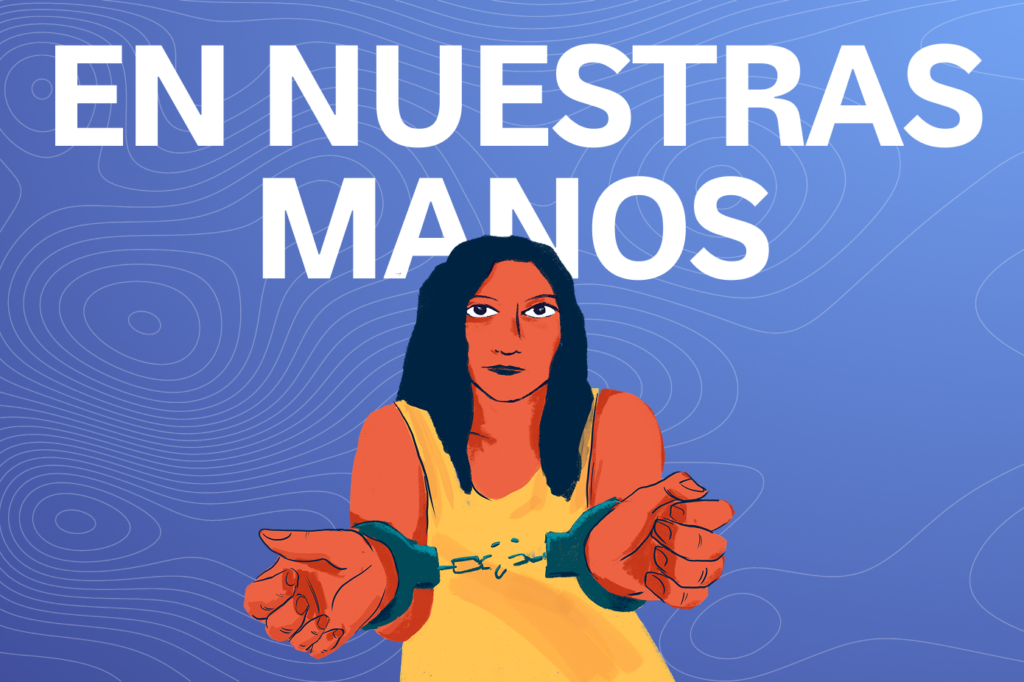
A podcast on community strategies against police violence
Podcast in Spanish with English transcript


Listen now on your favourite platform