



Funding a just transition: Weaving national and global pathways
Takeaways from the webinar ‘Who pays, who decides?’, in which INCLO members and experts exchanged pathways to fund a just energy transition in the middle of a multilateralism crisis.

By Marcela Madrid Vergara
Transitioning away from fossil fuels is not an overnight task, especially for developing countries that are highly dependent on coal, oil and gas revenues. A just transition requires global funding that flows in a sufficient, equitable and transparent manner. So, how to fund it in a context of growing authoritarianism and in the middle of a multilateralism crisis? Despite efforts from civil society and a coalition of countries pushing in that direction, a big gap remains: climate finance still falls short of what’s needed, it’s driving poor countries deeper into debt, and the international tax system remains full of loopholes.
The virtual panel Who pays, who decides? Financing a Just Energy Transition addressed some concrete pathways to overcome those obstacles. The conversation brought together experts from the Center for Economic and Social Rights (CESR), the Tax Justice Network, the Fossil Fuel Treaty Initiative, and INCLO member Dejusticia, with environmental media outlet Mongabay in the moderation. This was the second of the three-part INCLO webinar series Holding the Line: Just energy transitions amid democratic backsliding.
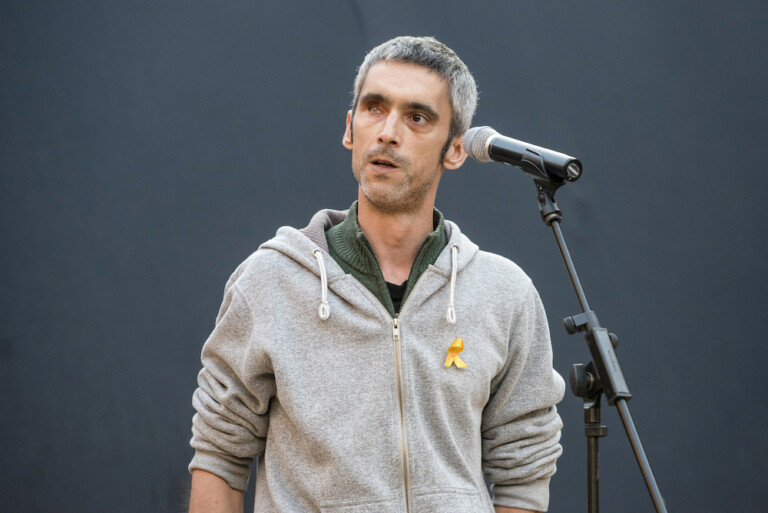
Before getting into the numbers, there is an important distinction to understand the magnitude of what transitioning away from fossil fuels entails for a country. As Rodrigo Uprimny, senior researcher at Dejusticia (Colombia), explained, there are two dimensions of this task: on the one hand, diversifying energy sources through renewables so the population’s energy access doesn’t depend on fossil fuels; on the other, diversifying the national economy so that it is not dependent on the revenues from fossil fuel exports and taxes.
The distinction is important because it reveals inequalities between countries. As Amiera Sawas, head of research of the Fossil Fuel Treaty Initiative, recalled, “almost every country in the world depends on fossil fuels, unfortunately, whether that’s for consumption or production”, the difference relies on the barriers they face to transition. Applied to the Colombian case, Uprimny mentioned how the past government made important attempts to cut fossil fuel subsidies, while in the macroeconomic dimension other decisions were more controversial: “(the government) unilaterally decided to halt oil and gas exploration without having made progress in diversifying the economy, while wealthy countries like Norway continue to advance in exploration and extraction.”
There is money, but…
In 2024, almost 200 countries agreed to a climate finance goal of 300 billion USD per year to support a just transition and enable developing nations to meet their climate goals. However, as Maria Ron Balsera, director of the CESR, warned, that number remains far below the 1.3 trillion USD that developing countries have identified as necessary. The United Nations Secretary General went further in his diagnosis of the gap. In a report published a few days before the webinar, he asserted that global needs for developing countries are estimated at 3.2 trillion USD per year, while international climate finance provided by developed nations reached only USD 136.7 billion in 2024.
But the volume is not the only problem. As Maria recalled, most of that money is flowing in the form of loans for developing countries, which increases debt and limits their ability to respond to the crisis: “A country facing repeated climate disasters needs to spend more on adaptation, resilient infrastructure, health, food systems, and social protection. Yet, that same country may be spending scarce public revenue servicing external debt.” At the same time, governments continue to provide enormous subsidies and tax benefits to the fossil fuel industry.
That vicious cycle is what Amiera calls the fossil fuel debt-trap, caused by fossil fuel dependence in Global South economies. The conflict in the Strait of Hormuz proved it: after the dramatic spikes in oil prices, importer countries like Egypt faced a tripling in the value of their crude oil imports, according to the Spillover Effects report. The trap begins when that situation “weakens fiscal space and leads to them seeking finance elsewhere, increasing debt.”
For Sergio Chaparro, head of advocacy at the Tax Justice Network, the debt-trap is a sign of how money is going in the wrong direction. He painted the picture in a balance, where low and middle income countries are losing more money as a result of debt payments and illicit financial flows (such as tax havens) than what they receive in the form of aid and climate reparations.
Africa is an extreme example of the “money going in the wrong direction” problem. While the continent has the greatest renewable potential on earth (due to its all-year access to sun and wind), it is not receiving the finance to develop it. On the contrary, as Amiera explained, African countries keep receiving funding to develop fossil fuel projects, mainly for exports. These governments are not to blame since “there’s no real incentive”: the cost of installing renewable energy projects in Africa and most of the Global South is much higher than installing fossil fuel projects, while the cost of renewable installations is cheaper in the Global North.
How to fix the financial architecture?
These global inequalities show that climate finance is not only a matter of numbers, but also a matter of power. Where should climate finance come from, and what financial reforms are needed to fix the barriers that developing countries are facing to transition away from fossil fuels? Maria from CESR listed some potential sources: progressive taxation of wealth and high incomes, levies on aviation and shipping, action against illicit financial flows, redirection of fossil fuel subsidies, and debt relief for countries committing to a just transition. She also warned about the ‘how’ of that funding: always grants instead of loans, and reject proposals that present the private sector as the only source “because we know the private sector is there to make profit, and this doesn’t align with what we are talking about.”
Along the same line, Sergio proposed two concrete ways in which tax policies can become a tool for a just transition. First, mobilizing resources by taxing big polluters and the wealthiest individuals; second, shifting incentives so tax benefits move away from polluting industries to cleaner economic activities. “This can also create a virtuous cycle in terms of strengthening a more diversified tax base, reducing the exposure that countries face to price changes, and building more legitimate tax systems.”
However, governments cannot risk taking steps to end the fossil fuel dependency in isolation. This is what Rodrigo calls the collective action dilemma: “How can a country unilaterally attempt to break free from its fossil fuel dependence when the prevailing international architecture denies it access to substitute resources?” There’s where national policies need to be connected with international agreements.
Sergio agreed and emphasized that, even if countries ake the right financial decisions –such as taxing the big polluting companies and wealthiest people–, these powerful actors could avoid taxes through the loopholes of the international tax system. This underscores the necessity of international cooperation: “The dilemma some governments are trying to present between sovereignty and cooperation is not real. You need to cooperate internationally with other countries to fix the loopholes of the international tax system so that you can enforce your domestic tax decisions.”
Democratic safeguards for climate finance
Colombia came up repeatedly in the conversation as an example of how progress on climate finance depends so heavily on political context. After four years of standing out as a global leader on just transition, the new government holds the opposite position, showing a sovereignist stance against multilateralism.
Departing from this case, the moderator Justin Catanoso presented a concrete question for all the speakers: “If you could establish one institutional safeguard today that would protect just transition finance from democratic backsliding over the next decade, what would it be?”
- Maria advocated for a legally binding, rights-based climate finance framework with mandatory transparency, meaningful public participation, independent monitoring, and accessible remedy, to be enforced by the UN. “This is how we can make sure that climate finance strengthens democratic institutions, rather than becoming another source of elite capture, which is what we are seeing.”
- Sergio called for civil society to join and strengthen the global movement demanding a UN Tax Convention, a binding Fossil Fuel Treaty and participate in the Santa Marta process to advance international cooperation on fossil fuels taxation.
- Amiera, besides advocating for a binding international agreement, such as a Fossil Fuel Treaty, encouraged civil society to engage the public across movements to envision and demand the future they want. “We need public engagement more than ever before.”
- Rodrigo agreed with all the proposals, and emphasized on the importance of connecting them with national policies. “If we do not link national politics to the global movement Sergio speaks of, to the coordination between movements that Amiera discusses, and to the creation of an international treaty, we will continue to see a disconnect between nationalist, authoritarian populisms and the need for multilateral solutions.”
Topics
Webinar Series